I’m gonna say the quiet part out loud: the day I switched to a Claude Code local LLM workflow, my laptop stopped feeling like a thin client and started feeling like a superpower. On a rainy Tuesday, Wi-Fi went down at a client site. No cloud. No API keys. Yet I kept shipping because everything—from code generation to small refactors—ran on my box. This guide distills exactly how to replicate that setup, with opinionated steps that work on macOS, Windows, and Linux. Why pair Claude Code with a local LLM? Four reasons keep pulling engineers toward a Claude Code local LLM stack: Privacy by default. Your source never leaves disk. No third-party logs, no audit surprises. Latency you can...
n8n AI workflow success comes down to one idea: your bots must talk like machines, not poets. Early on, I wired an LLM into a customer-support pipeline and felt invincible—until my database node choked on a heartfelt paragraph. Lesson learned. Since then, I’ve treated each n8n AI workflow like a factory line: reason, format, validate, then act. Clean data or no deal. Power Move #1 — Mindset shift: structure first, prose later Write like this on the whiteboard: “We produce JSON first.” In a n8n AI workflow, prose belongs at the edges (notifications, previews), never the core. Push the LLM to emit strictly typed objects, then build any human-friendly copy from those objects. This flips the default: no more...
Mac development environment setup can either be a runway or a maze. I learned that the messy way—new M‑series Mac, new client, late Thursday night. I had exactly one evening to get a backend service compiling, a React app hot‑reloading, and a test database seeded. Two hours in, Docker decided it didn’t like ARM, my shell theme blinked like a Christmas tree, and Postgres refused to start. I took a breath, grabbed a marker, and wrote three words on a sticky note: “repeatable, minimal, fast.” What follows is the battle‑tested playbook that grew from that night and a dozen laptops since. Who this is for (and the promise I’m making) If you build web apps, APIs, mobile apps, data...
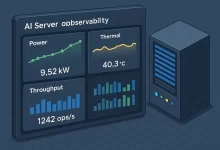
Three winters ago I got paged at 2:17 a.m. A demo cluster for an investor run-through was dropping frames. The culprit? A “temporary” test rig doing double duty as an AI server for video captioning and a grab bag of side projects. My eyes were sand; the wattmeter was screaming. The fix wasn’t a tweet, it was a rebuild—honest power math, sane storage, real cooling, and a scheduler that didn’t panic when a job went sideways. This guide is everything I’ve learned since: a no‑hype, hands‑dirty map to spec, wire, and run an AI server that stays fast after midnight. Why “AI Server” Is Its Own Species Call it what it is: a race car with a mortgage. A...
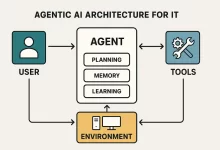
I first felt Agentic AI getting real on a Tuesday night when a flaky API started thrashing our checkout pipeline. Before I even reached for my phone, an agent spun up a canary, rewrote a failing health probe, and dropped an annotated Slack thread with graphs and a rollback plan. I still had to approve the change, but the “plan + diff + blast‑radius” showed up faster than my espresso machine can warm up. That was the moment I stopped seeing agents as flashy demos and started treating them like junior teammates that don’t get tired or ego‑hurt. So this isn’t theoretical. It’s the practical guide I wish I had six months ago—what to build, what to avoid, and how...
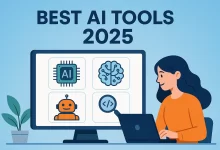
Seven frantic days, two red-eye flights, and more espresso than I’ll admit on record—that’s what it took to separate genuine innovation from buzzword confetti. The result is this deep-dive into the Best AI Tools 2025. I benchmarked each tool inside live client projects, grilled vendor PMs, and tallied ROI down to the hour. Buckle up: you’re about to save weeks of scouting and a small fortune in false starts. 1. Why the “Best AI Tools 2025” Hunt Is Mission-Critical Context is everything. In August 2025, OpenAI teased GPT-5, Anthropic pushed multi-agent orchestration into production, and Meta’s LlamaCon dumped a 400-page roadmap on dev feeds. Overnight, C-suites upgraded their AI budgets, and Google Trends logged a 140 % spike for...
I still remember hauling a beige 802.11b PC-Card to a coffee shop in 2001—thrilled about “11 Mbps” while my dial-up friends stared in envy. Fast-forward to last month when I pushed 3 Gbps over WiFi 6E during a VR demo and nobody blinked. That dizzying leap is exactly why understanding WiFi Generations matters more than ever. WiFi Features & Core Fundamentals Every WiFi Generations release inherits three promises: untethered access, vendor interoperability, and backward compatibility. But the devil lives in PHY advances—modulation, coding, and antenna math that decide whether your Zoom stays crisp or crumbles. Wireless freedom via 2.4 GHz, 5 GHz, and now 6 GHz ISM bands. Plug-and-play scale—one SSID can host dozens of laptops, cameras, sensors. Standards governance...
If you’ve been waiting—patiently or otherwise—for a meaningful refresh to Apple’s rugged wrist tank, buckle up. The Apple Watch Ultra 3 is closer than the espresso on my desk, and the rumor mill says it’s more than a paint-job upgrade. I spent the last week combing through supply-chain whispers, FCC filings, and my own developer notes to craft this monster guide so you don’t have to dig. Launch Window: Same Stage, Louder Fireworks Tradition—and a few manufacturing insiders—points to an early-September curtain-drop next to the iPhone 17 lineup. Unlike last year’s mid-cycle “hey look, it’s black titanium” stunt, Apple Watch Ultra 3 finally gets the full generational bump, closing the feature gap with Series 10 and then some. 9to5Mac’s calendar...
Enterprise Network Deployment doesn’t end when LEDs turn green. The real scorecard starts on “Day 2+”—that long haul where uptime, speed, and cost efficiency either make heroes of outsourcing teams or send CFOs hunting new vendors. Building on our Part 3 go-live victory lap and the iron-clad security fabric from Part 4, this final chapter dives deep into the gritty, coffee-fueled world of post-deployment operations. Grab that mug; we’re gonna keep this network humming. Define the Operational Charter: Who Owns What After Go-Live? Before the confetti lands, nail down an Operational Charter that maps every Enterprise Network Deployment component to a named owner and KPI. Our managed-service provider (MSP) contract usually splits duties: MSP NOC: 24 × 7 monitoring,...
Enterprise Network Deployment isn’t truly “done” when the links come up—it’s secure when every hostile packet dies at the perimeter and inside the fabric. After hammering through discovery, architecture, and implementation in Parts 1-3, our outsourced MSP crew now shoulders the heaviest crown: building a security posture that survives auditors, red-team drills, and next month’s zero-day headline. Why Zero-Trust Is Non-Negotiable for Outsourced Deployments When a giant enterprise hires us instead of leaning on its own IT squad, it’s betting that we’ll spot and squash threats faster than an in-house team juggling ten other projects. Zero-trust gives us that edge because identity becomes the new perimeter—users, devices, and apps must prove themselves at every hop. Think of it as...

 FoxDoo Technology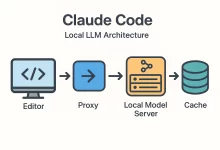
 FoxDoo Technology