Guides
Evergreen guides, templates, scorecards, and checklists for AI and automation adoption.
The Guides hub collects evergreen playbooks, scorecards, templates, and checklists for evaluating AI tools, planning automations, and building small-team tech stacks with fewer mistakes.

A practical 2026 guide to AI project management tools for small teams, with workflow fit, automation guardrails, meeting-note handoffs, reporting patterns, and rollout checklists.
OpenAI’s Codex safety notes highlight sandboxing, approvals, telemetry, and policy boundaries. That is a useful blueprint for teams testing AI coding agent
A practical short read on applying Codex-style safety patterns to small-team AI coding workflows.
Compare practical AI social media scheduling tools for small teams in 2026, including Buffer, Metricool, Later, Hootsuite, SocialBee, and Publer, with updated approval-workflow guidance.
A practical 2026 guide to AI customer support tools for small teams, including use cases, automation guardrails, human review points, support metrics, and rollout steps.
A practical Zapier vs Make vs n8n comparison for small teams choosing an automation platform for AI-assisted workflows, governance, and repeatable operations.
Use this practical 2026 checklist to decide whether a self-hosted LLM is worth it for a small business, including privacy, cost, workflow, governance, and rollout checkpoints.
Compare ChatGPT, Claude, and Gemini for coding in 2026 with a practical small-team workflow for planning, refactoring, review, testing, privacy, and safer AI-assisted development.
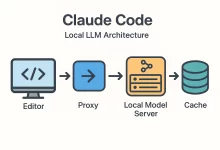
Set up a Claude Code local LLM workflow for private AI-assisted coding, with practical small-team guardrails for source code privacy, review, testing, and automation.
Cursor Rules help turn AI coding from a one-off chat into a repeatable team workflow. This guide explains when to use project rules, how to structure safer instructions, and what to check before letting an AI assistant edit production code.

 FoxDoo Technology
 FoxDoo Technology