UI design trends 2025 are transforming how we interact with digital products. A couple of years ago, I was working late on a side project and realized my old dashboard design—cluttered menus, poor contrast, and slow animations—felt outdated. When I refactored it with new UI design patterns like adaptive dark mode, smoother motion, and clean typography, the difference was night and day. Users immediately commented that it felt “fresher” and “easier to use.” That moment convinced me: design trends matter not just for looks, but for usability, trust, and adoption. Why UI Design Trends 2025 Matter Design is never static. Just like frameworks and programming languages evolve, UI has its cycles. UI design trends 2025 represent where users’ expectations...
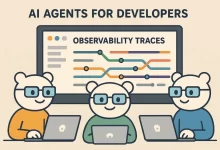
AI agents for developers are finally being judged by the only metric that matters—do they help us ship better software, faster, with fewer surprises? I remember a Thursday night last winter when our release candidate started failing in staging. Our tiny agent looked at the logs, grabbed a recent runbook, and suggested rolling back a questionable feature flag. It wasn’t glamorous. It was calm and specific. We still reviewed the plan, but that little helper cut thirty minutes from a sticky incident and let us ship before midnight. That’s the energy of this piece. No theatrics, just field-tested moves for building agent systems that don’t flake out under pressure. We’ll look at the architecture that keeps you sane, the retrieval...
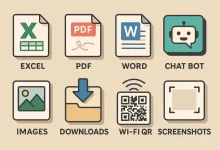
Python automation scripts changed my workday rhythm. A few months back, I had a stack of spreadsheets, a pile of scanned invoices, and a boss who wanted “one neat report by 5 PM.” I brewed a questionable espresso, opened VS Code, and stitched together a tiny toolkit. Two hours later, everything clicked—files merged, PDFs renamed, images shrunk, and a neat contract set printed. Since that week, I’ve kept a folder of bite-size utilities ready to fire. This guide is that folder, cleaned up for you. We’ll mirror a simple structure for each task: the scenario, a clean script, and the thinking behind it. I’ll offer light upgrades so you can adapt fast. And because these Python automation scripts are meant...
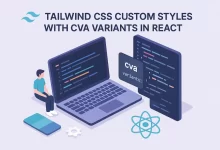
Tailwind CSS custom styles changed how I ship front-ends. A quick story: one late Friday I promised a client a dark-mode dashboard “by Monday.” I had a raw React app, a sketchy color palette, and way too much coffee. Twelve hours later—thanks to Tailwind’s theme.extend, a tiny plugin, and a couple of @layer utilities—that dashboard looked like a product. Not a prototype. Since then, my rule is simple: keep styles composable, automate the boring parts, and make it easy for teammates to do the right thing without thinking. This guide follows that mindset. We’ll mirror a practical structure you can follow step-by-step: integrate Tailwind in React, understand the core directives, extend the theme, create reusable component classes, write and package...
Qwen3-0.6B isn’t a lab toy anymore—it’s the kind of small language model that quietly makes big systems better. I learned that the hard way one Friday night: a checkout pipeline lagged, ad bids were missing windows, and we didn’t have the budget to shove a 70B beast into the hot path. We dropped a tiny Qwen3-0.6B stage in front, cleaned queries, screened junk, trimmed context—and the graphs calmed down before the pizza got cold. That’s the spirit of this deep dive: how Qwen3-0.6B wins the last mile where milliseconds matter, why it’s perfect for safety triage, how it flies on-device, and where it shines as a pretraining backbone. I’ll show patterns you can copy tomorrow—plus the trade-offs you shouldn’t ignore....
If you’ve shopped monitors lately, you’ve seen the alphabet soup: HDR10, HDR400, HDR600, maybe a flashy badge that promises “cinema-grade color.” I’ve been there—standing in a big-box store, squinting at demo loops that all look great until you bring the screen home. This is the no-nonsense explainer I wish I had the first time I bought an HDR monitor. Quick vibe check. HDR isn’t just about turning brightness to 11. It’s about a wider dynamic range—deep, convincing shadows living next to brilliant highlights without crushing one or blowing the other. Do it right and sunsets feel warm, neon signs feel electric, and night-time scenes stop looking like murky soup. Do it wrong and your HDR monitor either looks washed out...
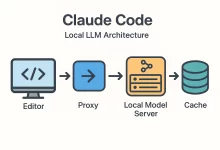
Set up a Claude Code local LLM workflow for private AI-assisted coding, with practical small-team guardrails for source code privacy, review, testing, and automation.
n8n AI workflow success comes down to one idea: your bots must talk like machines, not poets. Early on, I wired an LLM into a customer-support pipeline and felt invincible—until my database node choked on a heartfelt paragraph. Lesson learned. Since then, I’ve treated each n8n AI workflow like a factory line: reason, format, validate, then act. Clean data or no deal. Power Move #1 — Mindset shift: structure first, prose later Write like this on the whiteboard: “We produce JSON first.” In a n8n AI workflow, prose belongs at the edges (notifications, previews), never the core. Push the LLM to emit strictly typed objects, then build any human-friendly copy from those objects. This flips the default: no more...
Mac development environment setup can either be a runway or a maze. I learned that the messy way—new M‑series Mac, new client, late Thursday night. I had exactly one evening to get a backend service compiling, a React app hot‑reloading, and a test database seeded. Two hours in, Docker decided it didn’t like ARM, my shell theme blinked like a Christmas tree, and Postgres refused to start. I took a breath, grabbed a marker, and wrote three words on a sticky note: “repeatable, minimal, fast.” What follows is the battle‑tested playbook that grew from that night and a dozen laptops since. Who this is for (and the promise I’m making) If you build web apps, APIs, mobile apps, data...
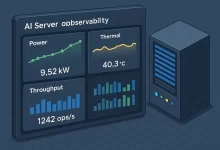
Three winters ago I got paged at 2:17 a.m. A demo cluster for an investor run-through was dropping frames. The culprit? A “temporary” test rig doing double duty as an AI server for video captioning and a grab bag of side projects. My eyes were sand; the wattmeter was screaming. The fix wasn’t a tweet, it was a rebuild—honest power math, sane storage, real cooling, and a scheduler that didn’t panic when a job went sideways. This guide is everything I’ve learned since: a no‑hype, hands‑dirty map to spec, wire, and run an AI server that stays fast after midnight. Why “AI Server” Is Its Own Species Call it what it is: a race car with a mortgage. A...

 FoxDoo Technology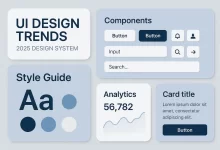
 FoxDoo Technology